






A delegate badge is one of the most operationally important items delegates at the Event Organisers Summit use. It’s a moving access pass, a networking prompt, and a live wayfinding tool: all in a format people glance at while walking. The best badge systems are the ones that balance four priorities at once: readability, role clarity, accessibility and security…
Readability at distance: design for the real viewing conditions
Badges aren’t read at a desk; they’re read at arm’s length, under mixed lighting, in motion. Start with typography that performs. Use a clear sans-serif, avoid condensed fonts, and prioritise large name text. A good rule is to make the delegate name the most prominent element on the badge, with organisation secondary and role/permissions clearly separated.
Keep layouts consistent across badge types so staff don’t have to ‘re-learn’ each one. Limit the number of text blocks and avoid clutter: if everything is important, nothing is.
Roles and permissions: colour systems that staff can act on
Colour is the fastest way to communicate access levels, but only if it’s designed as a system. Best practice is to use a small, controlled palette with high contrast, applied consistently to a dedicated permissions band (e.g., top strip or side bar).
Make colours meaningful and operational: staff should be able to spot “VIP,” “Speaker,” “Crew,” “Exhibitor,” “Media,” and “Access All Areas” instantly, without reading small print. Where access differs by zone or day, use simple icons or short labels (e.g., “HALL A,” “BACKSTAGE,” “DAY 1–2”) rather than complex codes.
Accessibility: inclusive badges are better badges
Accessible badge design reduces friction for everyone. Use colour-blind safe combinations and never rely on colour alone: pair colour with icons or text labels. Ensure contrast is high enough to be readable in low light and at speed.
Many events are also normalising respectful identity and support cues. If you include pronouns, make them optional and clearly opt-in. Consider discreet, attendee-controlled indicators for accessibility needs (for example, “Please face me when speaking” or “Mobility support”), designed with privacy and choice in mind.
Security and anti-fraud: subtle features, strong controls
As badge swapping and counterfeits become more common, simple anti-fraud elements make a difference. Use a mix of visual and technical controls: holographic stickers, tamper-evident sleeves, microtext, and unique QR codes tied to live registration data. If using RFID/NFC, pair it with visible permissions so staff aren’t forced to scan every entry point.
Crucially, align badge policy with staffing reality: if a zone is high-risk, design the badge and checkpoint so checks are fast and consistent.
2026 Trend: Personalisation meets tech integration
Personalisation is rising, but it must serve operations. On-demand printing enables accurate data, badge type flexibility and last-minute updates. Meanwhile, tech integration (RFID/QR/mobile pairing) can streamline access and analytics, but only when the physical badge remains instantly readable.
The goal is simple: a badge system that helps people move, helps staff decide, and helps your event run smoothly, all at a glance.
Are you searching for Badging solutions for your events? The Event Organisers Summit can help!
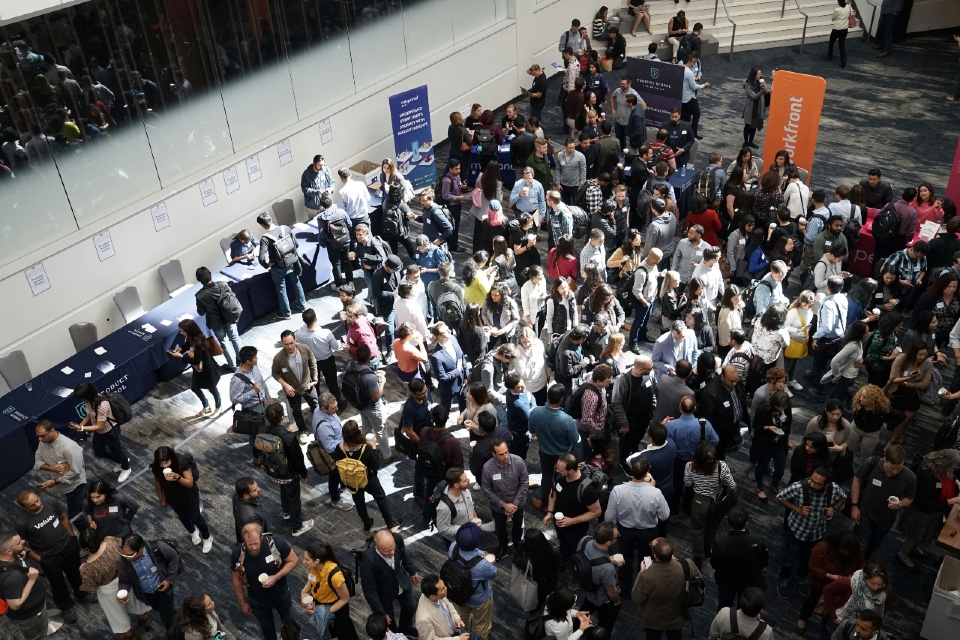
Photo by Kelly Sikkema on Unsplash