





Food trucks at festivals and sporting events. Temporary food stalls at Bonfire Night and Halloween events. Christmas markets. Pop-up hospitality is undoubtedly a staple of the event experience. In fact, according to 2026 research from Mintel, consumers are increasingly judging events on the overall experience, expecting greater convenience, flexibility and higher-quality food and drink.
Yet, delivering that experience across pop-up hospitality operations presents unique challenges. Vendors must manage significant spikes in demand, connectivity issues, fierce competition, bad weather and very limited space to store ingredients, cook food and serve customers. Despite all this, customer expectations remain high. Consumers now expect the speed, accuracy and safety that they receive at a permanent operation, despite these vendors operating with a fraction of the space and infrastructure. Expectations are high.
Stuart Colverd, Head of Sales Northern Europe, BIXOLON Europe, explains how receipt and label printing technology supports accuracy, food safety, compliance and the overall customer experience…
Setting the scene – peak time at pop-ups
From summer festivals to Halloween, Bonfire Night and Christmas markets, the second half of the year presents numerous high-footfall opportunities for pop-up hospitality vendors.
At these events, guests now expect a wide selection of food, drink and merchandise, coupled with a great, efficient service. This high level of demand can be particularly challenging as these vendors experience peak times throughout each day too. For example, at a festival, demand surges between sets. Football games see peak trading before, after and during half-time. At Bonfire Night, demand may be dictated by the fireworks or bonfire displays, and Christmas markets often experience peak trading on Friday evenings and weekends. No one really likes standing in long, slow queues.
During these intense peaks, the ability to move customers quickly from ordering and payment through to collection becomes essential. Reliable and fast receipt and food/drink order ticket printing can help keep wait times minimal and queues manageable, while printed tickets can act as proof of purchase to help ensure secure collection of the correct items. This is especially useful in cases where multiple orders are taken at once, or when different staff members are handling orders and collection.
Supporting order accuracy
While efficiency is essential, so too is accuracy. Unlike their permanent counterparts – such as restaurants, pubs and bars – pop-up hospitality operators are under extreme pressure to get things right the first time. After all, at a restaurant, customers can flag an issue and the order is rectified at the table. But at events, customers will walk away with their order, leaving little opportunity to correct order mistakes in the same way. Or they’ll stay and hold up the queue while it’s being corrected, risking potentially losing customers to other vendors. It’s not only about getting preferences right, however. Accuracy is also critical when it comes to dietary requirements and allergens.
In a noisy, crowded and fast-moving environment, relying on verbal communication or handwritten notes alone about orders can introduce avoidable errors. To help reduce this unnecessary risk, kitchen label printers can provide a clear, physical record of each order, including modifications and allergen requirements. Once the order is prepared, labels can be applied directly to its takeaway packaging, helping staff match the correct dish to the right customer.
Supporting food safety during behind-the-scenes food preparation
Getting each order right is important. But it is just as vital to ensure food safety and traceability for all ingredients and stored items behind the scenes.
Natasha’s Law, which came into effect in the UK in 2021, requires full ingredient and allergen labelling on pre-packed food for direct sale (PPDS). This reinforces the importance of accurate and clear food labelling. To support food traceability within pop-up operations, pre-printed labels can record ingredients, product dates and relevant allergen information for food that has been prepared ahead of an event.
Real-time printed labels can also record when items have been removed from freezers and can support ‘use by’ and ‘best before’ management. Linking this information to barcodes and back-end traceability systems can then provide operators who are equipped with this technology with even greater visibility of stock levels, shelf life and produce that should be prioritised.
Variable-length linerless labels can further simplify this process. Once printed, these labels can be torn off and applied directly, without the typical backing paper associated with traditional labels that would otherwise need to be disposed of appropriately. This allows the label length to be matched to the information being printed. It also helps address another challenge these vendors face: limited workspace. This is because these printers are designed for tight spaces.
Technology to suit tight spaces
The technology requirements of pop-up operations are very different from those of a permanent restaurant. Space is limited. Layouts may be required to change depending on the event, and operators cannot always rely on fixed infrastructure and connectivity being possible or available. Technology must fit in with, and around, the temporary operations, rather than dictate how space will be used.
Compact mobile receipt and label printing solutions can help vendors make better use of limited space. Reliable wireless connectivity provides greater flexibility to pop-up hospitality operators over where POS technology and printers are reasonably positioned and without having to deal with cables becoming a safety hazard. The practical elements of the technology must be considered too. Straightforward media changes can minimise disruption, while LCDs provide immediate operating feedback, helping staff identify and address issues quickly, for example. There’s nothing worse than being unable to read the screen with a long queue waiting in the rain, or a receipt roll change that just doesn’t work when the pressure is building up. Ultimately, the selection of technology must be considered in a way that ensures the limited space doesn’t translate into a compromised service or customer experience.
Conclusion
Pop-up hospitality vendors experience a great surge between summer festivals and winter Christmas markets. In fact, the global music festival market value in 2025 was valued at $3.76 billion, according to Global Growth Insights. In the UK, organised firework shows bring in £13.4m in turnover each year. And, Europe’s Christmas markets generate almost €1 bn, with the most visited Christmas markets in Germany and France welcoming over 17 million people in 2025.
This significant footfall and the potential revenue associated with it must not be wasted by avoidable inefficiency or poor customer service, with the same sentiment applying across a wide range of pop-ups at hospitality events. Therefore, while working in these temporary spaces, operators must ensure they consistently meet customer expectations, delivering the same speed, accuracy, and safety that consumers demand in well-run permanent hospitality locations.
Therefore, pop-up teams need the confidence to serve customers quickly, safely and accurately, knowing that communication across each individual customer journey is being handled effectively. Efficient receipt and label printers deliver this quietly and confidently from the background for pop-ups.
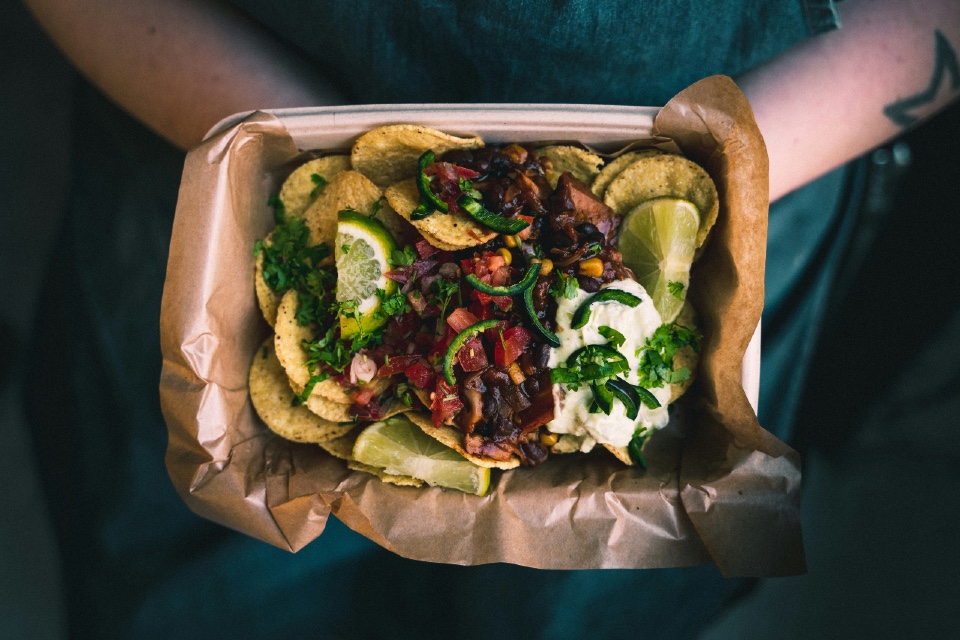
Image credit: https://unsplash.com/photos/chips-with-lemon-CeCQP3ouZuw